
Travel7 minute read

Table of contents
Confident kids feel at ease with money. They are comfortable asking questions, making choices, and handling small mistakes. That confidence often begins earlier than parents expect, long before formal lessons or explanations.
When money feels familiar at home, kids grow up seeing it as something they can use and understand. Not something to avoid or worry about. For many families, that familiarity now starts digitally, where children can see money move, grow, and change in real time.
Raising money-smart kids does not require complicated systems or constant teaching. It grows naturally when money is part of everyday life and kids are trusted with a little more responsibility as they grow.
Everyday habits build confidence
Children learn how money works by seeing it in action. Simple moments matter.
Talking through everyday decisions helps kids understand how choices are made. Paying for groceries. Choosing between two options. Saving together for something fun. These small experiences show that money is a tool for planning and priorities.
When money is discussed openly and calmly, it feels manageable. Whether it is cash or digital, kids learn that money is part of daily life, not a source of stress.
Skills grow with age
Money confidence develops over time, and it looks different at every stage.
Younger kids enjoy making simple choices, like spending now or saving for later. Older kids start to understand trade-offs and consequences. Teenagers benefit from more independence, with room to make their own decisions and learn from the results.
At every age, familiarity matters more than getting it right.
Responsibility makes money real
Having something of their own to manage helps kids feel capable.
A regular allowance shows how money comes in, how it is used, and what happens when it runs out. That rhythm helps kids connect choices to outcomes in a natural way. With bunq’s Pocket Money feature, allowances are set up once and paid automatically, so kids know what to expect and parents never have to remember.
With a bunq Child Account, allowances can be set automatically, giving kids a clear place to spend and save. Parents keep insight without needing to step in, supporting independence while staying connected.
Learning through experience
Confidence grows when kids are free to try.
Spending too quickly or choosing something they later regret is part of learning. These moments are valuable, especially when the stakes are low.
Kids can explore independence safely. Parents stay connected with full insight, giving children the freedom to learn by making their own choices.
Saving with a purpose
Saving feels more rewarding when it leads to something kids care about. A goal they chose themselves.
With a high-interest Savings Account, money grows along the way, helping kids see saving as active and motivating. It shows them that money is something they can use to make things happen. Looking to help them save a little extra money? Turn on Auto Round Up: bunq adds your spare change to your Savings Account every time you pay.
Confidence that grows over time
Money skills change as kids grow, and that is exactly how it should be. What matters is that money stays familiar, approachable, and useful.
bunq’s Child Accounts are designed to support this confidence from the start, helping families build healthy money habits step by step. When kids grow up feeling comfortable with money, confidence comes naturally.
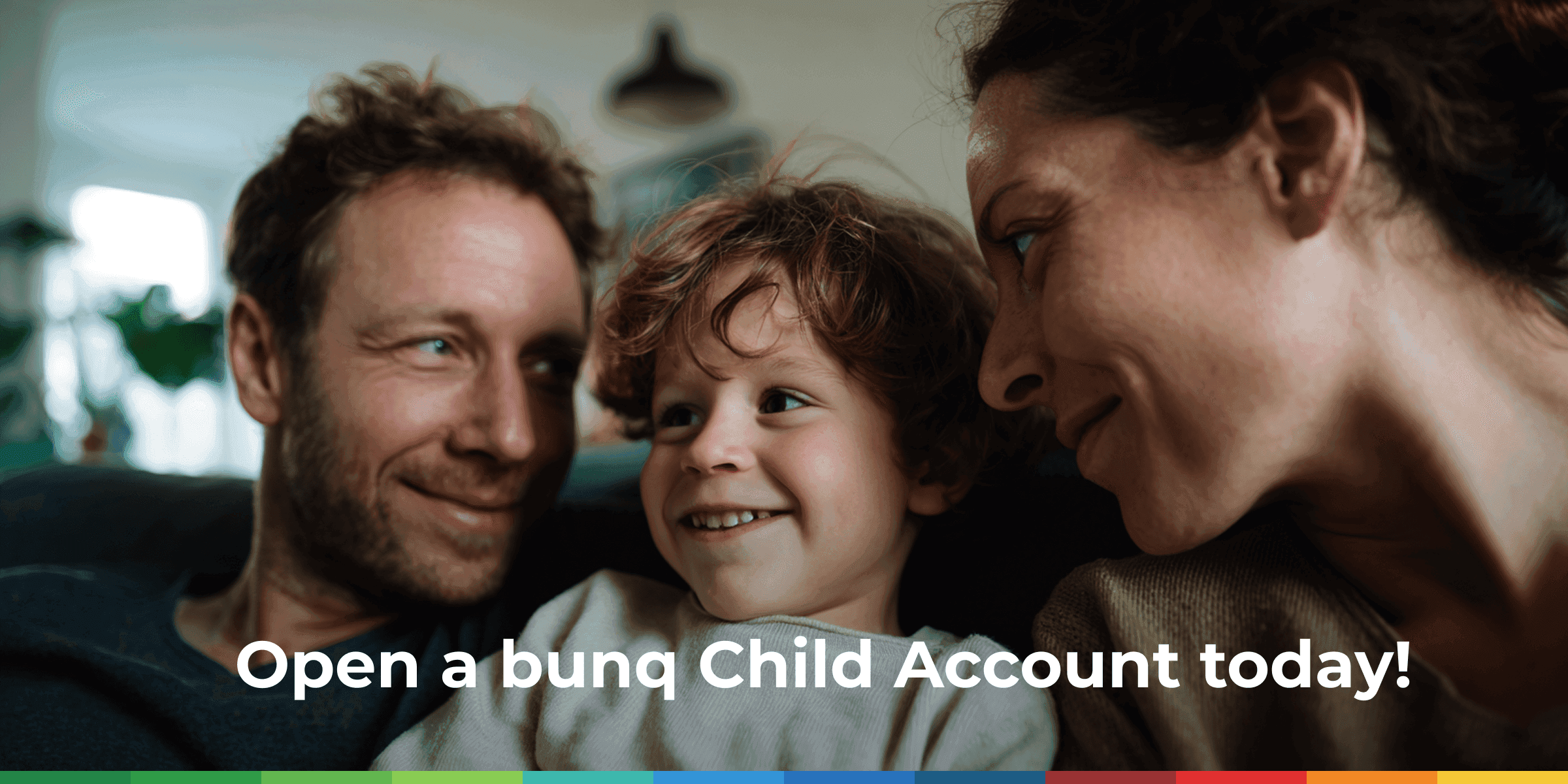
Ready to start your child on their financial journey? Open a bunq Child Account today!
Share this post
Table of contents
Confident kids feel at ease with money. They are comfortable asking questions, making choices, and handling small mistakes. That confidence often begins earlier than parents expect, long before formal lessons or explanations.
When money feels familiar at home, kids grow up seeing it as something they can use and understand. Not something to avoid or worry about. For many families, that familiarity now starts digitally, where children can see money move, grow, and change in real time.
Raising money-smart kids does not require complicated systems or constant teaching. It grows naturally when money is part of everyday life and kids are trusted with a little more responsibility as they grow.
Everyday habits build confidence
Children learn how money works by seeing it in action. Simple moments matter.
Talking through everyday decisions helps kids understand how choices are made. Paying for groceries. Choosing between two options. Saving together for something fun. These small experiences show that money is a tool for planning and priorities.
When money is discussed openly and calmly, it feels manageable. Whether it is cash or digital, kids learn that money is part of daily life, not a source of stress.
Skills grow with age
Money confidence develops over time, and it looks different at every stage.
Younger kids enjoy making simple choices, like spending now or saving for later. Older kids start to understand trade-offs and consequences. Teenagers benefit from more independence, with room to make their own decisions and learn from the results.
At every age, familiarity matters more than getting it right.
Responsibility makes money real
Having something of their own to manage helps kids feel capable.
A regular allowance shows how money comes in, how it is used, and what happens when it runs out. That rhythm helps kids connect choices to outcomes in a natural way. With bunq’s Pocket Money feature, allowances are set up once and paid automatically, so kids know what to expect and parents never have to remember.
With a bunq Child Account, allowances can be set automatically, giving kids a clear place to spend and save. Parents keep insight without needing to step in, supporting independence while staying connected.
Learning through experience
Confidence grows when kids are free to try.
Spending too quickly or choosing something they later regret is part of learning. These moments are valuable, especially when the stakes are low.
Kids can explore independence safely. Parents stay connected with full insight, giving children the freedom to learn by making their own choices.
Saving with a purpose
Saving feels more rewarding when it leads to something kids care about. A goal they chose themselves.
With a high-interest Savings Account, money grows along the way, helping kids see saving as active and motivating. It shows them that money is something they can use to make things happen. Looking to help them save a little extra money? Turn on Auto Round Up: bunq adds your spare change to your Savings Account every time you pay.
Confidence that grows over time
Money skills change as kids grow, and that is exactly how it should be. What matters is that money stays familiar, approachable, and useful.
bunq’s Child Accounts are designed to support this confidence from the start, helping families build healthy money habits step by step. When kids grow up feeling comfortable with money, confidence comes naturally.
Ready to start your child on their financial journey? Open a bunq Child Account today!
Share this post
Table of contents
Confident kids feel at ease with money. They are comfortable asking questions, making choices, and handling small mistakes. That confidence often begins earlier than parents expect, long before formal lessons or explanations.
When money feels familiar at home, kids grow up seeing it as something they can use and understand. Not something to avoid or worry about. For many families, that familiarity now starts digitally, where children can see money move, grow, and change in real time.
Raising money-smart kids does not require complicated systems or constant teaching. It grows naturally when money is part of everyday life and kids are trusted with a little more responsibility as they grow.
Everyday habits build confidence
Children learn how money works by seeing it in action. Simple moments matter.
Talking through everyday decisions helps kids understand how choices are made. Paying for groceries. Choosing between two options. Saving together for something fun. These small experiences show that money is a tool for planning and priorities.
When money is discussed openly and calmly, it feels manageable. Whether it is cash or digital, kids learn that money is part of daily life, not a source of stress.
Skills grow with age
Money confidence develops over time, and it looks different at every stage.
Younger kids enjoy making simple choices, like spending now or saving for later. Older kids start to understand trade-offs and consequences. Teenagers benefit from more independence, with room to make their own decisions and learn from the results.
At every age, familiarity matters more than getting it right.
Responsibility makes money real
Having something of their own to manage helps kids feel capable.
A regular allowance shows how money comes in, how it is used, and what happens when it runs out. That rhythm helps kids connect choices to outcomes in a natural way. With bunq’s Pocket Money feature, allowances are set up once and paid automatically, so kids know what to expect and parents never have to remember.
With a bunq Child Account, allowances can be set automatically, giving kids a clear place to spend and save. Parents keep insight without needing to step in, supporting independence while staying connected.
Learning through experience
Confidence grows when kids are free to try.
Spending too quickly or choosing something they later regret is part of learning. These moments are valuable, especially when the stakes are low.
Kids can explore independence safely. Parents stay connected with full insight, giving children the freedom to learn by making their own choices.
Saving with a purpose
Saving feels more rewarding when it leads to something kids care about. A goal they chose themselves.
With a high-interest Savings Account, money grows along the way, helping kids see saving as active and motivating. It shows them that money is something they can use to make things happen. Looking to help them save a little extra money? Turn on Auto Round Up: bunq adds your spare change to your Savings Account every time you pay.
Confidence that grows over time
Money skills change as kids grow, and that is exactly how it should be. What matters is that money stays familiar, approachable, and useful.
bunq’s Child Accounts are designed to support this confidence from the start, helping families build healthy money habits step by step. When kids grow up feeling comfortable with money, confidence comes naturally.
Ready to start your child on their financial journey? Open a bunq Child Account today!
Share this post
Related reading
Explore more tips and stories from bunq.


Related reading
Explore more tips and stories from bunq.
Related reading
Explore more tips and stories from bunq.
Ready for easier banking?
Money habits start early. Everyday routines build confidence with money, without tense lectures or stress.
Ready for easier banking?
Money habits start early. Everyday routines build confidence with money, without tense lectures or stress.
Ready for easier banking?
Money habits start early. Everyday routines build confidence with money, without tense lectures or stress.