
Travel7 minute read

Table of contents
The idea of working remotely from a picturesque European capital is like a dream come true. Whether you’re after a cultural shift, a lifestyle change, or a fresh view, working abroad brings unique experiences. It’s an opportunity for digital nomads and remote workers alike to explore new horizons. Smart planning helps you manage costs while fully experiencing each of Europe’s unique capitals.
In this year’s bunq Working Abroad Index, we’ve analyzed the cost of living and working in 28 European capitals. We’ve broken down essential expenses—including rent, groceries, utilities, public transport, and mobile and internet costs—comparing data from 2023 and 2024. If you’re considering relocating to Europe for remote work, these figures will help you with planning.
How Much Does It Really Cost?
We know it, and you’ve definitely felt it. The average cost of living in a European capital in 2024 is now €1,586 per month—a 5% increase compared to 2023. At the top end, London will set you back €3,227 per month, making it the most expensive city. On the other hand, Bucharest is the most affordable, with living costs of just €829 per month. That’s a difference of €2,398!
While rising costs are something expats should be aware of, especially in Western European cities, smart planning can help you take full advantage of the incredible opportunities these destinations offer—without breaking the bank.
The Most Expensive Cities to Live in
London tops the list as Europe’s priciest city for expats, with high living costs and bustling attractions that draw people worldwide. While it’s full of culture and global flavors, expats should brace for a steep price tag. With average monthly expenses hitting €3,227, the bulk of this cost comes from housing—rent alone takes up around €2,255 of that amount. Dublin isn’t far behind, with costs sitting at €2,634 per month, while Amsterdam rounds out the top three at €2,564 per month. For these cities, high rent prices are the key driver of overall expenses.
With an average monthly cost of living at €1,832, Berlin remains a more affordable choice than London or Amsterdam. Like these cities, Berlin is an expat-friendly destination where you can easily get by speaking English, making it a convenient choice for expats.
Best Budget-Friendly Capitals
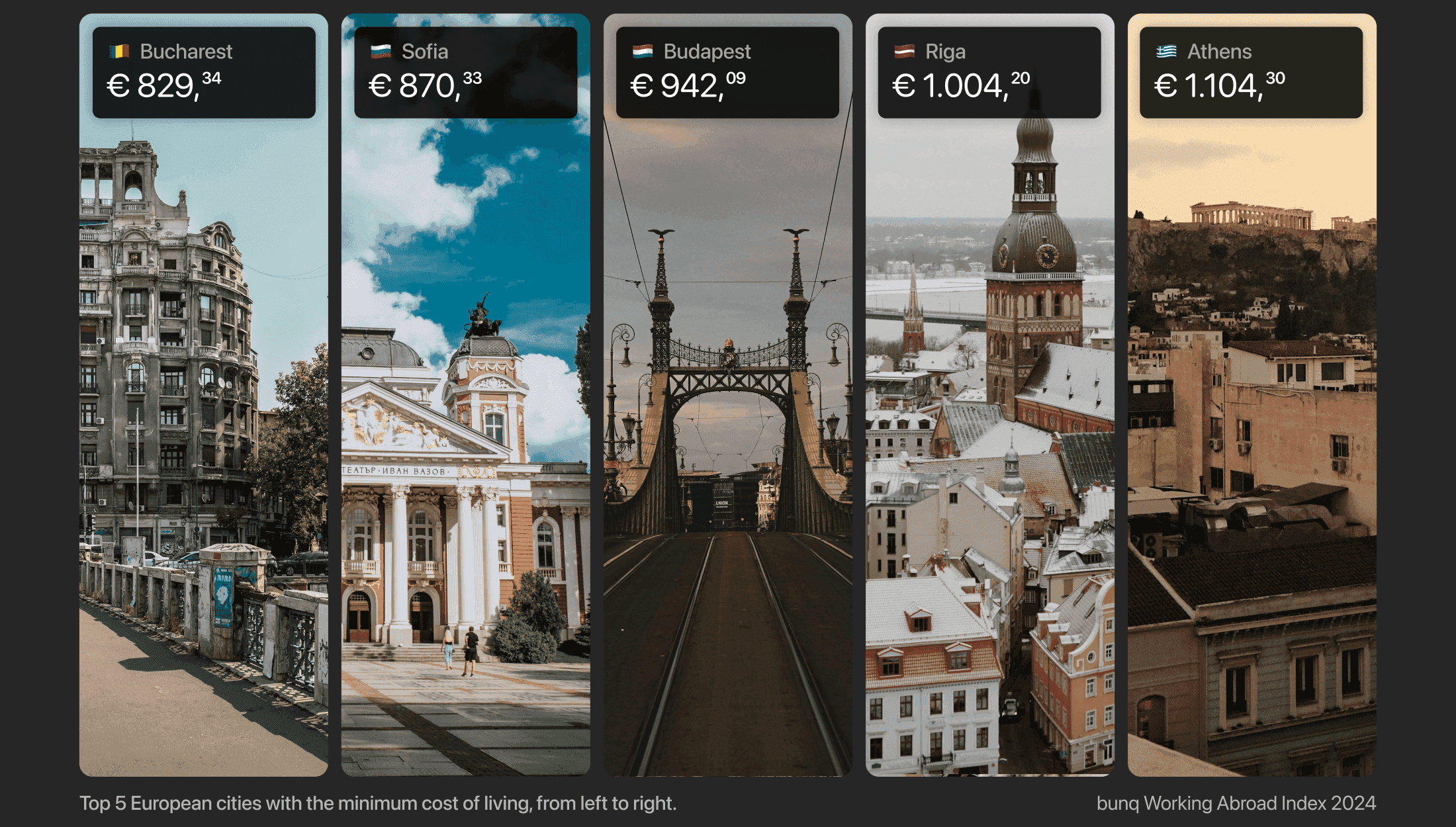
If you’re a digital nomad who wants to stretch your budget further, the capitals of Eastern Europe are where you’ll find the most value for money. Bucharest takes the crown for the most affordable capital in Europe, with a total average cost of €829 per month. Sofia and Budapest are also excellent budget options, where monthly living costs hover around €870 and €942, respectively.
These cities offer a much lower cost of living while still providing everything you need for remote work, from reliable internet and affordable co-working spaces to convenient public transport and plenty of cafés to work from. Rent, in particular, is much cheaper here, with the cost of a one-bedroom apartment in these capitals typically well below €550.
The Impact of Rising Prices in 2024
The most notable change in 2024 is the price hikes we’re seeing across several European capitals. Madrid leads the way with a staggering 24.9% increase in overall living costs compared to last year. Amsterdam isn’t far behind, with an increase of 17.7%, while Vienna rounds out the top three with a 13% rise.
This trend isn’t universal, though. Some cities have actually seen a drop in prices, with Prague standing out for having the largest decrease. In Prague, the cost of living fell by 11.7%, on the other hand, Valletta and Rome also recorded modest decreases in expenses, down by 6.3% and 3.4%.
Rent Dominates Expenses
Housing is the biggest cost for expats in most European capitals, and the numbers from our study back that up. In London, rent alone makes up nearly 70% of the total monthly living expenses, with the average one-bedroom apartment costing €2,255 per month. Dublin and Amsterdam are similarly expensive, with rents around €1,862 and €1,857, respectively.
Public Transport and Co-working Spaces: A Mixed Bag
Public transport prices have remained steady across much of Europe. On average, digital nomads will spend around €60.70 per month on public transport, with Bucharest offering some of the lowest costs at just €16.10 per month. In Luxembourg, public transport is free—a big perk for expats there.
However, when it comes to co-working spaces, Luxembourg is the most expensive city, where the average monthly price is €378.50. Digital nomads in Dublin and Rome can also expect to pay over €300 per month for a co-working space. If you’re looking to save on workspace costs, Budapest offers one of the most affordable options at just €147.20 per month.
Digital Nomad Visa Costs
One final factor to consider if you’re planning to work remotely in Europe is the cost of a digital nomad visa, which more and more countries are starting to require. Malta tops the list with the most expensive visa fee at €300. On the other hand, Croatia’s capital Zagreb offers the cheapest visa at just €65, making it an attractive option for long-term stays.
Final Thoughts
Working abroad in 2024 presents an exciting opportunity, but it’s crucial to stay informed about the rising costs in European capitals. Whether you’re captivated by the cultural melting pot of London or drawn to the unique charm of Bucharest, understanding the financial landscape will help you to make the best choice for your next adventure. As you plan your move, staying informed about these figures will empower you to choose a destination that fits both your lifestyle and your budget, ensuring you get the most out of your European adventure. Check out bunq’s Working Abroad Index here.
Share this post
Table of contents
The idea of working remotely from a picturesque European capital is like a dream come true. Whether you’re after a cultural shift, a lifestyle change, or a fresh view, working abroad brings unique experiences. It’s an opportunity for digital nomads and remote workers alike to explore new horizons. Smart planning helps you manage costs while fully experiencing each of Europe’s unique capitals.
In this year’s bunq Working Abroad Index, we’ve analyzed the cost of living and working in 28 European capitals. We’ve broken down essential expenses—including rent, groceries, utilities, public transport, and mobile and internet costs—comparing data from 2023 and 2024. If you’re considering relocating to Europe for remote work, these figures will help you with planning.
How Much Does It Really Cost?
We know it, and you’ve definitely felt it. The average cost of living in a European capital in 2024 is now €1,586 per month—a 5% increase compared to 2023. At the top end, London will set you back €3,227 per month, making it the most expensive city. On the other hand, Bucharest is the most affordable, with living costs of just €829 per month. That’s a difference of €2,398!
While rising costs are something expats should be aware of, especially in Western European cities, smart planning can help you take full advantage of the incredible opportunities these destinations offer—without breaking the bank.
The Most Expensive Cities to Live in
London tops the list as Europe’s priciest city for expats, with high living costs and bustling attractions that draw people worldwide. While it’s full of culture and global flavors, expats should brace for a steep price tag. With average monthly expenses hitting €3,227, the bulk of this cost comes from housing—rent alone takes up around €2,255 of that amount. Dublin isn’t far behind, with costs sitting at €2,634 per month, while Amsterdam rounds out the top three at €2,564 per month. For these cities, high rent prices are the key driver of overall expenses.
With an average monthly cost of living at €1,832, Berlin remains a more affordable choice than London or Amsterdam. Like these cities, Berlin is an expat-friendly destination where you can easily get by speaking English, making it a convenient choice for expats.
Best Budget-Friendly Capitals
If you’re a digital nomad who wants to stretch your budget further, the capitals of Eastern Europe are where you’ll find the most value for money. Bucharest takes the crown for the most affordable capital in Europe, with a total average cost of €829 per month. Sofia and Budapest are also excellent budget options, where monthly living costs hover around €870 and €942, respectively.
These cities offer a much lower cost of living while still providing everything you need for remote work, from reliable internet and affordable co-working spaces to convenient public transport and plenty of cafés to work from. Rent, in particular, is much cheaper here, with the cost of a one-bedroom apartment in these capitals typically well below €550.
The Impact of Rising Prices in 2024
The most notable change in 2024 is the price hikes we’re seeing across several European capitals. Madrid leads the way with a staggering 24.9% increase in overall living costs compared to last year. Amsterdam isn’t far behind, with an increase of 17.7%, while Vienna rounds out the top three with a 13% rise.
This trend isn’t universal, though. Some cities have actually seen a drop in prices, with Prague standing out for having the largest decrease. In Prague, the cost of living fell by 11.7%, on the other hand, Valletta and Rome also recorded modest decreases in expenses, down by 6.3% and 3.4%.
Rent Dominates Expenses
Housing is the biggest cost for expats in most European capitals, and the numbers from our study back that up. In London, rent alone makes up nearly 70% of the total monthly living expenses, with the average one-bedroom apartment costing €2,255 per month. Dublin and Amsterdam are similarly expensive, with rents around €1,862 and €1,857, respectively.
Public Transport and Co-working Spaces: A Mixed Bag
Public transport prices have remained steady across much of Europe. On average, digital nomads will spend around €60.70 per month on public transport, with Bucharest offering some of the lowest costs at just €16.10 per month. In Luxembourg, public transport is free—a big perk for expats there.
However, when it comes to co-working spaces, Luxembourg is the most expensive city, where the average monthly price is €378.50. Digital nomads in Dublin and Rome can also expect to pay over €300 per month for a co-working space. If you’re looking to save on workspace costs, Budapest offers one of the most affordable options at just €147.20 per month.
Digital Nomad Visa Costs
One final factor to consider if you’re planning to work remotely in Europe is the cost of a digital nomad visa, which more and more countries are starting to require. Malta tops the list with the most expensive visa fee at €300. On the other hand, Croatia’s capital Zagreb offers the cheapest visa at just €65, making it an attractive option for long-term stays.
Final Thoughts
Working abroad in 2024 presents an exciting opportunity, but it’s crucial to stay informed about the rising costs in European capitals. Whether you’re captivated by the cultural melting pot of London or drawn to the unique charm of Bucharest, understanding the financial landscape will help you to make the best choice for your next adventure. As you plan your move, staying informed about these figures will empower you to choose a destination that fits both your lifestyle and your budget, ensuring you get the most out of your European adventure. Check out bunq’s Working Abroad Index here.
Share this post
Table of contents
The idea of working remotely from a picturesque European capital is like a dream come true. Whether you’re after a cultural shift, a lifestyle change, or a fresh view, working abroad brings unique experiences. It’s an opportunity for digital nomads and remote workers alike to explore new horizons. Smart planning helps you manage costs while fully experiencing each of Europe’s unique capitals.
In this year’s bunq Working Abroad Index, we’ve analyzed the cost of living and working in 28 European capitals. We’ve broken down essential expenses—including rent, groceries, utilities, public transport, and mobile and internet costs—comparing data from 2023 and 2024. If you’re considering relocating to Europe for remote work, these figures will help you with planning.
How Much Does It Really Cost?
We know it, and you’ve definitely felt it. The average cost of living in a European capital in 2024 is now €1,586 per month—a 5% increase compared to 2023. At the top end, London will set you back €3,227 per month, making it the most expensive city. On the other hand, Bucharest is the most affordable, with living costs of just €829 per month. That’s a difference of €2,398!
While rising costs are something expats should be aware of, especially in Western European cities, smart planning can help you take full advantage of the incredible opportunities these destinations offer—without breaking the bank.
The Most Expensive Cities to Live in
London tops the list as Europe’s priciest city for expats, with high living costs and bustling attractions that draw people worldwide. While it’s full of culture and global flavors, expats should brace for a steep price tag. With average monthly expenses hitting €3,227, the bulk of this cost comes from housing—rent alone takes up around €2,255 of that amount. Dublin isn’t far behind, with costs sitting at €2,634 per month, while Amsterdam rounds out the top three at €2,564 per month. For these cities, high rent prices are the key driver of overall expenses.
With an average monthly cost of living at €1,832, Berlin remains a more affordable choice than London or Amsterdam. Like these cities, Berlin is an expat-friendly destination where you can easily get by speaking English, making it a convenient choice for expats.
Best Budget-Friendly Capitals
If you’re a digital nomad who wants to stretch your budget further, the capitals of Eastern Europe are where you’ll find the most value for money. Bucharest takes the crown for the most affordable capital in Europe, with a total average cost of €829 per month. Sofia and Budapest are also excellent budget options, where monthly living costs hover around €870 and €942, respectively.
These cities offer a much lower cost of living while still providing everything you need for remote work, from reliable internet and affordable co-working spaces to convenient public transport and plenty of cafés to work from. Rent, in particular, is much cheaper here, with the cost of a one-bedroom apartment in these capitals typically well below €550.
The Impact of Rising Prices in 2024
The most notable change in 2024 is the price hikes we’re seeing across several European capitals. Madrid leads the way with a staggering 24.9% increase in overall living costs compared to last year. Amsterdam isn’t far behind, with an increase of 17.7%, while Vienna rounds out the top three with a 13% rise.
This trend isn’t universal, though. Some cities have actually seen a drop in prices, with Prague standing out for having the largest decrease. In Prague, the cost of living fell by 11.7%, on the other hand, Valletta and Rome also recorded modest decreases in expenses, down by 6.3% and 3.4%.
Rent Dominates Expenses
Housing is the biggest cost for expats in most European capitals, and the numbers from our study back that up. In London, rent alone makes up nearly 70% of the total monthly living expenses, with the average one-bedroom apartment costing €2,255 per month. Dublin and Amsterdam are similarly expensive, with rents around €1,862 and €1,857, respectively.
Public Transport and Co-working Spaces: A Mixed Bag
Public transport prices have remained steady across much of Europe. On average, digital nomads will spend around €60.70 per month on public transport, with Bucharest offering some of the lowest costs at just €16.10 per month. In Luxembourg, public transport is free—a big perk for expats there.
However, when it comes to co-working spaces, Luxembourg is the most expensive city, where the average monthly price is €378.50. Digital nomads in Dublin and Rome can also expect to pay over €300 per month for a co-working space. If you’re looking to save on workspace costs, Budapest offers one of the most affordable options at just €147.20 per month.
Digital Nomad Visa Costs
One final factor to consider if you’re planning to work remotely in Europe is the cost of a digital nomad visa, which more and more countries are starting to require. Malta tops the list with the most expensive visa fee at €300. On the other hand, Croatia’s capital Zagreb offers the cheapest visa at just €65, making it an attractive option for long-term stays.
Final Thoughts
Working abroad in 2024 presents an exciting opportunity, but it’s crucial to stay informed about the rising costs in European capitals. Whether you’re captivated by the cultural melting pot of London or drawn to the unique charm of Bucharest, understanding the financial landscape will help you to make the best choice for your next adventure. As you plan your move, staying informed about these figures will empower you to choose a destination that fits both your lifestyle and your budget, ensuring you get the most out of your European adventure. Check out bunq’s Working Abroad Index here.
Share this post
Related reading
Explore more tips and stories from bunq.


Related reading
Explore more tips and stories from bunq.
Related reading
Explore more tips and stories from bunq.
Ready for easier banking?
Key insights from the Working Abroad Index 2024, rising costs in Europe and what it means for you.
Ready for easier banking?
Key insights from the Working Abroad Index 2024, rising costs in Europe and what it means for you.
Ready for easier banking?
Key insights from the Working Abroad Index 2024, rising costs in Europe and what it means for you.